I happened to pick up this classic at a book store, and read it without knowing much about Homer, or that this was, in fact, a sequel to Illiad. I later found out that the significance of this magnificent poem: it is the second-oldest extant work of Western literature, with Illiad being the first. As old, mystical and different to modern literature The Odyssey is, it is an enrapturing read with events, circumstances, and human emotions that are in no way unrelatable to. In fact, the adversities faced by each of the protagonists, and their reactions to these, may easily find counterparts in modern human life.
Odysseus, whose name means “trouble” in Greek, faces a number of life-threatening ordeals and adventures as he battles with the fury of lord Poseidon in his quest to return Ithaca, his home, after the ten-year long Trojan war. Meanwhile, his wife, Penelope, who is still unaware if Odysseus is alive or dead, uses her wit to elude the advances of a set of unscrupulous suitors who plague her house, squander its wealth, and compete to marry her. The story also depicts the quandary faced by Odysseus’s son, Telemachus, who must helplessly watch his father’s home get wrecked and disgraced by the “suitors” for his mother, and also wonder about ways to bring back his father. He later sets out on a journey to find Odysseus, with the help of goddess Athena.
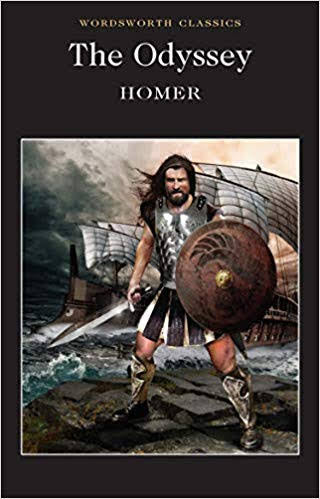
The theme that reverberates throughout the poem is that of homecoming. While Odysseus battles relentlessly against adversity to return to his place as king of Ithaca, the loyalty and courage of Penelope contribute equally to his victorious and grand homecoming. The magnetism of home, familiarity, family and the sense of belonging, are seen throughout the poem, and as most people can relate to, bolster the determination and endurance of Odysseus.
The most striking thing about The Odyssey is its ability to tell so complex and intermingled a story, with fantastic events and creatures, mounting tragedy and suspense, and a medley of human states, emotions and experiences, all in the form of flawless and aesthetic poetry. Each scene unfolds with a set of rhymes tailor-made to bring out a powerful effect on the reader. This success of The Odyssey may be credited not only to the author Homer, but also almost equally to the English translator, George Chapman. All in all, this book deserves a read from any literature enthusiast: not only because it lies at the roots of modern Western literature, but also because it is delightfully entertaining.